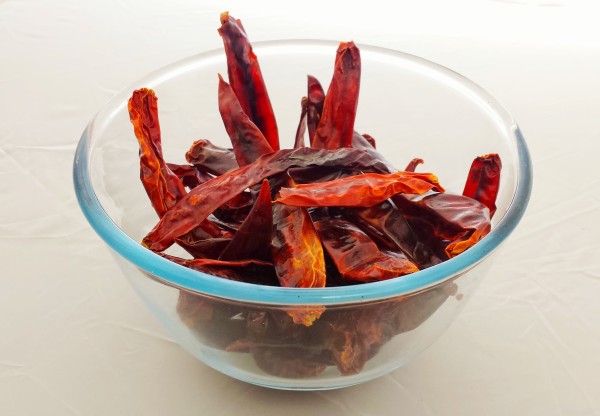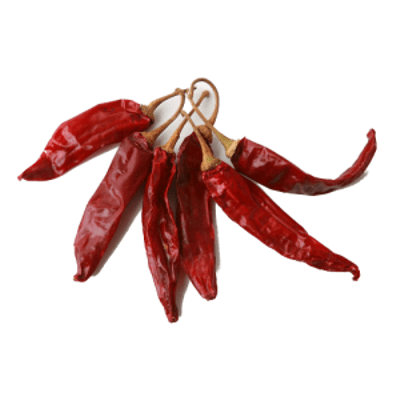
RED CHILLI

(Scientific Name: CAPSICUM FRUTESCENS)

The chilli pepper (chilli) is the fruit of plants from the genus Capsicum, members of the nightshade family, Solanaceae. They are widely used in many cuisines to add spiciness to dishes. The substances that give chilli peppers their intensity when ingested or applied topically are capsaicin and related compounds known as capsaicinoids. It is used as a spice to add pungency or piquancy and flavor to dishes. A substance called capsaicin gives chillies their distinctive hot, peppery taste. The chemical stimulates areas of the skin and tongue that normally sense heat and pain, fooling the brain into thinking they are burning.


TASTE OF RED CHILLI

Chilli is the dried, pulverized fruit of one or more varieties of chilli pepper, sometimes with the addition of other spices. It is used as a spice to add pungency or piquancy and flavor to dishes. A substance called capsaicin gives chillies their distinctive hot, peppery taste. The chemical stimulates areas of the skin and tongue that normally sense heat and pain,fooling the brain into thinking they are burning Pungency is the condition of having a strong, sharp smell or taste that is often so strong that it is unpleasant. Pungency is the technical term used by scientists to refer to the characteristic of food commonly referred to as spiciness or hotness and sometimes heat, which is found in foods such as chilli.

CHARACTERISTICS

Chilli crop grows well in deep loamy fertile soil with appropriate moisture content. Best time for sowing chillies is between April and June, i.e. in hot and humid weather. But dry weather is required at the time of harvesting. Major chilli growing countries are India, China, Etiopia, Myanmar, Mexico, Vietnam, Peru, Pakistan, Ghana, and Bangladesh. These countries produce approximately 85% of the total red chilli in the world. Among all the major producers, India dominates in chilli production and is the largest exporter as well due to superior quality found here. In India major production comes from Andhra Pradesh, Maharashtra, Karnataka, Orissa and Rajasthan. Guntur is the major physical market for red chillies at Andhra Pradesh, India.

Commodity

Chilli

Origin

Chilli peppers originated in Mexico. After the Columbian Exchange, many cultivars of chilli pepper spread across the world, used for both food and traditional medicine. Chillies were grown and cultivated from 3500 BC. Mexicans used it to spice up their food. Chilli was brought to the rest of the world by Christopher Columbus who discovered America in 1493.

Lenght

2.5cm to 11 cm

Health Benefits

Chillies are good source of iron and B-complex group.

It protect against cancer.

It help in boosting immune power.

It help in reducing risk of lung cancer.

Chillies are zero calorie food so aid in weight management.

It helps to digest food faster.
Nutritive Value of Red Chilli

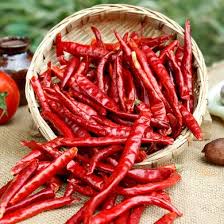
This food is low in Sodium, and very low in Saturated Fat and Cholesterol. It is also a good source of Dietary Fiber, Thiamin, Riboflavin, Niacin, Folate, Iron, Magnesium, Phosphorus and Copper, and a very good source of Vitamin A, Vitamin C, Vitamin K, Vitamin B6, Potassium and Manganese.

Parameters Value
Moisture 10.000 gm
Protein 15.000 gm
Fat 6.200 gm
Minerals 6.100 gm
Fiber 30.200 gm
Carbohydrates 31.600 gm
Energy 246.000 K cal
Calcium 160.00 mg
Parameters Value
Phosphorus 370.000 mg
Carotene 345.000 μg
Thiamine 0.930 mg
Riboflavin 0.430mg
Niacin 9.500mg
Vitamin C 50.000mg
Sodium 14.000mg
Potassium 530.000 mg
Phytin Phosphorus 71.000mg